Every rule the game actually runs, with the numbers it runs
them on. This is the reference; the
guide is the readable version of the same thing.
The object
You hold a wooden frame with a ball loose inside it. Drag the
frame; the ball is never dragged. Keep the ball in, catch what
the forest drops through it, and last as long as you can. The
frame is falling apart the whole time, so “keep the ball
in” gets harder without anything being added.
Two numbers are kept: how long you lasted, and how many bounces
you scored. Both are ranked separately, locally and globally.
The frame and the ball
The frame is 0.66 of the
screen’s width, and its walls are
0.06 of that again.
The ball is 24 pixels in radius
— the same size as the chain, the splitter, the magnet and
the boxit,
which is deliberate: anything that crosses the field is exactly
as big a thing to steer around as the ball is to steer.
The ball holds a constant speed. It has no gravity, no damping
and perfectly elastic bounces, because the design is a ball that
keeps going rather than one that settles. Dragging the frame
cannot fling it: a wall that sweeps into the ball pushes it only
as far as it takes to stop overlapping, and never transfers the
drag’s speed.
A bounce off wood scores nothing. It keeps the ball in play so
there is time to catch things, and that is all it is for —
points come from collidables and from nothing else. Every
25 points the game says so
out loud.
The three kinds of collidable
What an item looks like is decoration. What group it is in
decides how it moves, how long it lives and what it pays. Every
scene has its own art for all three — see
the scenes.
Group
Pays
How it behaves
Falling
1
Drops from above the screen, tumbling. Reaching the
floor uncaught bursts it — a miss you are shown.
One arrives every
1.8–3.4
seconds.
Windblown
2
Crosses sideways on a slow, swaying wind. Arrives as
a gust of
4–10, all of
one kind, all at one speed, every
5–9.5
seconds. Leaves quietly past the far edge — a leaf
blowing away is not a miss.
Growing
1–5
Sprouts at the bottom and swells in place without
moving, over
14
seconds. Worth the minimum as a sprout and the maximum
full-grown, so leaving one to ripen is a real decision
against the risk of chasing it later. A batch every
6–10
seconds, at most
6 alive.
The four things that cross
These are not collidables. Each drifts in a straight line at a
constant speed, turning slowly, and each is the ball’s own
size. None of them is scored on contact; what each one does is
change the run.
Golden orb
The only repair in the game. Taking one banks a
charge — hold up to
3 at
once — and
spending one rebuilds the plank the ball is about to
escape through, on the spot. Worth no bounces at all
— it buys you a save. One every
2–7
seconds, depending on how good the game thinks you
are.
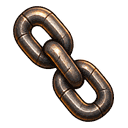
The chain
Locks the frame where it stands for
2 seconds,
counting down on screen. Everything else keeps
going — the ball, the clock, the cracking —
so being locked is being made to watch. Every
14–24
seconds early on, down to
6–11
by level
10.
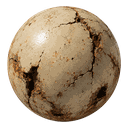
The splitter
A cracked stone that opens into a second ball. Your
ball bounces off it, the stone becomes a ball of its
own, and from then on the run ends only when
every ball is gone. Capped at
2 balls, so no
stone appears while you already have your fill.
Every
18–30
seconds, down to
9–15
by level
10.
The magnet
The rarest thing on the field and the only one that
clears it. Everything on screen is dragged to the
ball that took it and popped as it arrives, each one
paying what it was worth. The near items land first
and the far ones trail in behind. Every
45–75
seconds.
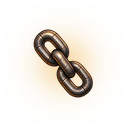
The boxit
The chain again, with a golden glow around it, and
it does the chain’s opposite. Touch it and
every hole in the frame — and every corner
— is chained shut for
2
seconds. The frame still answers your finger and
the wood goes on rotting underneath; what changes
is that for those two seconds nothing can get out.
A small countdown says how long is left. Every
45–75
seconds.
Two balls in play bounce off each other. Like a bounce off wood,
that knock pays nothing: only what gets caught moves the
number.
The charm, and the streak
One item in every wind gust glows gold and leaves a short
golden wake behind it. It is an ordinary item in every other
respect — it blows the same way and is worth the same on
its own. Catch it and every other item of its own kind pops in
turn, one every
0.09 seconds, each
paying what it was worth. A ten-strong gust taken at the charm
is ten items at once.
The charm rides the gust rather than a clock because a gust is
the only thing in the playfield that arrives as a crowd. Every
other group delivers ones and twos, so a charm anywhere else
would be a promise the field could not keep.
Hitting the same kind twice in a row doubles what it
pays, and again for every one after that. The factor is
written over the hit in gold, and a doubling hit sounds the
golden orb’s chime rather than the ordinary pop. Anything
of a different kind starts again at one.
The streak doubles, and stops doubling at
32.
Four of a kind in a row pay 1 + 2 + 4 + 8
= 15 times one of them, and a chain up to six long pays
exactly what it always did. Past that the multiplier holds
at 32: a
sixteen-strong chain pays 383 rather than 65,535. A wind
gust is all of one kind by design, so a long chain is still
the single biggest thing you can do to a score — a
highlight to chase rather than a number that makes the rest
of the game pointless.
Only your own hits build it. The run of pops a charm sets off is
one hit, and the magnet dragging a mixed field in is not a
streak at all.
Decay, difficulty and rating
The frame breaks where the ball hits it, not on a clock —
nothing about a side opens just because time passed. What the
clock still drives is the ball’s own speed: left alone, it
reaches full speed in
180 seconds at
the gentlest setting and
90 at the
harshest. There is no promise the run ends by then — it
ends when the ball finds a hole wide enough to fall through, and
only that.
Which of those two you get is your rating, and difficulty is
locked when a run starts — a target that moved mid-run
would punish you for playing well. The same rating sets a second
dial too: a plank takes fewer hits to break the higher you are
rated, so a strong player faces a faster-ramping ball and a
frame that gives way sooner, both together. The harshest setting
has the ball at full speed by about
90 seconds, so par is roughly
“still holding on once the ball is at its fastest”.
Wood does not grow back on its own, and the one repair in the
game does not wait for the ball to move clear either — a
spent rescue charge rebuilds a plank right under the ball, on
purpose, and bounces it back inside.
There is one exception to “nothing opens on a clock”:
park the frame and leave it there and every surviving plank
takes a crack at once, then again, for as long as you hold
still. A puff of dust off the wood warns you
2 seconds
before it happens, and the whole cycle repeats every
10 seconds you go
without moving the frame. The clock is frozen while a boxit has
the frame chained — that lock already takes your control
away, and this rule does not punish you twice for it.
Levels and XP
XP comes from survival time, not from what you caught, plus
10 for finishing a run
at all so the bar always visibly moves. Each level costs
100 more than the one before
it: level 2 costs 100, level 3 costs 300 in total, level 5
costs 1000.
Levels are time invested; rating is skill. They are kept apart
on purpose — XP only ever climbs, rating can fall, and the
two answer different questions. Levels unlock
scenes and frame skins; rating sets
difficulty and the band you are ranked in. Four of the six
scenes are level unlocks (1, 3, 8, 15); the Desert and the
Crystal Cave come with Boxscape Premium, as do the temple frame
and the golden ball. None of it touches difficulty or scoring.
The chain and the splitter arrive more often the higher your
level, reaching their fastest at level
10. That is level
rather than rating on purpose: serving a better player
more chains would be punishing them for being good, whereas a
higher level just means the forest has got busier around you.
How a run ends
A run ends when the last ball has fully cleared the frame
— touching an opening is not enough, and with a splitter
taken it takes both. What you scored is then measured against
your own best in your band, your rating is updated, XP is
awarded, and any trophies the run earned are counted.
One exception, on Android: if a rewarded ad is ready, you hold
no rescue charge and you have not continued this run already,
the last ball's escape does not end the run at once. The field
freezes and you are offered one more chance for an ad, with five
seconds to decide. Declining, letting the clock run out, or an
ad that does not play to the end all end the run exactly as
above. Accepting rebuilds the plank the ball escaped through with
the ball inside — the same placement a spent rescue charge
makes — and play resumes with the clock and the bounce count
where they were. See the next section for what a continued run
counts for.
Trophies are checked twice a second while you play, not only at
the end, so one earned at ninety seconds arrives at ninety
seconds. There are 118 of them —
all of them are listed here.
The continue, the ads and Premium
A continued run counts for XP and for the run counter, and
for nothing that ranks you: it is not sent to the leaderboards,
it does not update your rating or your band, it does not set a
personal best, it does not feed the lifetime survival clock, and
the trophies in the survival and bounces categories skip it,
mid-run and at the end. Every other trophy category is judged as
usual. The results board marks it CONTINUED. One continue per
run; a second escape ends it.
Double XP is offered on the results board when no ad has
played that run: one rewarded ad pays the run's XP a second time.
Rewarded ads are therefore at most one per run, whichever of the
two it was.
An interstitial is shown before the run starts when you
press PLAY AGAIN, if all of these hold: it is at least the sixth
run played, the count since the fifth is a multiple of four, no
rewarded ad played this run, the results board did not just show
a new backdrop, a frame, a promotion, a trophy or the review
prompt, and you do not own Boxscape Premium. The menu's PLAY
button never shows one.
Boxscape Premium is a one-time purchase. It removes the
interstitials and unlocks the Desert, the Crystal Cave, the
temple frame and the golden ball. It changes nothing about the
ball, the frame's decay, the difficulty served for your rating,
or how a run is scored, and the two rewarded ads stay available
to a Premium player as an option.
 Boxscape